As spring / summer is upon us and we are all getting more active again after the winter. The garden needs attention and many are getting back to sporting activities again. Getting back to exercise after a period of being relatively less active of course puts us at greater risk of minor injuries and general aches and pains.
We have all seen team medics running onto the pitch and applying ice packs or cold sprays to players writhing in real or simulated agony but when is it best to use ice and when is heat better? Recent research has now provided helpful guidance on this matter.
Cold/Ice Treatment
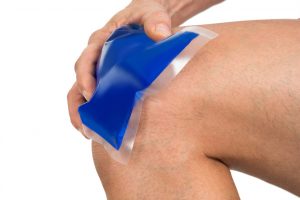
The best choice for the treatment of recent injuries is ice. This method is suitable for an injury or pain less than 72 hours old, or any injury that continues to produce swelling. Ice decreases pain, relieves muscle spasms, stimulates circulation in areas of discomfort and has a “calming” effect on nerves. It can also help reduce tissue damage by stimulating vasoconstriction – the closing of small blood vessels. This helps limit the amount of swelling and inflammation that occurs immediately after an injury.
The best way to use Ice treatment in the first 72 hours following an injury is at a frequency of 10-15mins every 60 to 90 Minutes. Ideally, ice should be used at this frequency until the ache/pain has decreased to the point where it is not felt at night or on waking in the morning but clearly the practicalities of life usually make it difficult to sustain this regularity so do what you can when you can. For best result on a leg or arm injury try to elevate the area as this will help to control any swelling. A top tip for any lower limb injury is to place a pillow under the bottom of your mattress so you leg will be slightly elevated while you sleep.
Ice treatment is best applied with a gel ice pack, or some ice in a plastic bag. Failing this a packet of frozen peas will do the job! It is best to wrap your ice pack or frozen vegetables in a tea towel before applying it to your skin. For hands or feet you can soak them in a bucket or bowl of icy water for a maximum 10-15 minutes per session.
Caution should be taken when using ice and Ice or cold packs should never be put directly on the skin and cold packs can be even colder than natural ice. Neither ice nor cold packs should be used for longer than 20 minutes and do not use ice on insensitive skin (areas where you have decreased skin sensation or numbness) or areas of poor circulation. Elderly people, young children and diabetics should be careful when using ice treatment. If in doubt please ask your health care practitioner for advice.
Heat Applications
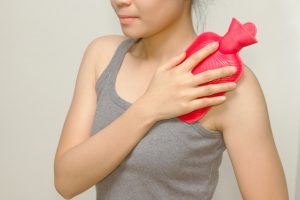
Heat promotes muscle relaxation, stimulates circulation and can relieve stiffness and chronic aches and pains in muscles. It is best used with chronic, long-standing problems or old injuries that have no inflammation or swelling.
Muscle soreness and spasms are the most common symptoms treated with heat. Its effectiveness is achieved by increasing tissue temperatures and blood flow, thereby drawing nutrients into the area to assist in the healing process. This treatment can also help ease the discomfort associated with osteoarthritis and help to increase range of motion and, therefore, decrease pain.
Heat treatment is usually applied with a dry or moist heat pack, hot bath, electric heat pad or infra-red heat lamps. Most people have a hot water bottle around the house and this is a convenient way of applying heat. As with ice always place a tea towel or cloth between the heat pad and your skin. Never apply heat for periods of longer than 20 Minutes.
Take care when applying heat and again It should not be placed over insensitive skin. Heat should not be applied to an injury until the swelling is controlled.
With heat applications if a repeat session is needed you should wait until the skin has completely back to a normal appearance and temperature. This usually takes about 60 minutes. Never reapply heat or indeed ice before the skin has completely recovered. Ideally, leave an hour and a half between all ice and heat applications.
Treatment with Cold and Hot
Alternating cold and hot applications are good for encouraging a good circulatory exchange in long standing or chronic injuries and painful areas. It is sometimes known as contrast therapy. The best method of application is to apply cold / ice to the area for about 2 minutes and then apply heat for about 3 minutes. The cold again for 2 minutes and then hot for 3 minutes. You can keep alternating like this for up to a maximum of 30 minutes. The general consensus of opinion is that you should start and end on a cold application. Please remember all the precautions mentioned above relating to both cold and hot applications.
If you have any queries do please phone The Monaghan Osteopathy Clinic and seek advice.